


Welcome to Pocket Lint #040. In this edition:
Lint
Reading
Death Drives
Lint
I’ve tried a lot of things on Substack, but I’ve never tried writing a real newsletter.
I was reading Drew Gummerson’s diary. I enjoy Drew’s stories, and Saltburn is a very entertaining collection, and I like his newsletters just as much. The strange thrill of reading about the stories he’s writing, and then reading the stories.
Why don’t I do that, I thought. Since I’m not doing anything else.
One of the stories I’m working on is for Lint. The story was called “Death Readings”, but it seemed like a mistake to have death in the title. Now it’s called “The Immortals”. It’s about books, the power of words, how I briefly brought a woman back to life through reading at her deathbed. I’ve been working through a lot of modernist (brodernist) prose. Conrad, Proust, Thomas Bernhard, Beckett, Sebald, Saramago, Geoff Dyer, Jordan Castro. Does Ben Lerner count?
It’s fun to draft in that brodernist voice. I had an existential experience which I describe in “The Immortals”, which made me think I love and have no choice except to write like Bernhard, Saramago, Jon Fosse, etc. As soon as I wrote the first draft of the story, Naomi Kanakia posted an excellent essay about how everyone wants to write like Thomas Bernhard. So now I have a brodernist voice, just like everyone else.
I gave my short story, “Dante in Love”, to one of my writing groups. I gave my short story, “Be Fast”, to another. I hadn’t touched Dante in a year, and then I rewrote it very quickly from scratch. I spent about two weeks on it, then emailed it to my group. I felt bad sending it off in that state, but I was past my deadline. I thought it might be unhelpful to receive feedback on something so obviously still in progress. I thought the problems would be plain to everyone in the group. But the feedback mirrored my own thinking: a lot of people thought it needs to be shorter; several thought it could be a novella. I, too, think the story could be shorter, or become a novella. I’m leaning novella.
“Be Fast” was the first complete story I tried in that brodernist voice, inspired by Saramago and before I’d read any Thomas Bernhard. I didn’t think I knew how to revise it, since it came out by itself, without much thought or craft. I knew there was something compelling about it, but I was terrified of editing the story. I thought editing it would kill the voice. But the feedback didn’t take issue with the voice. I was so worried about the voice, I’d missed glaring mistakes in the storytelling.
I no longer feel terrified that I’m going to kill my stories. Now I think that a story is a kind of performance. Every draft becomes a single artistic act, or as close to it as possible. Even this newsletter: I drafted it over several weeks, on my phone walking to buy bread, or in spare moments in my notebook. Now I’m retyping it into Substack. I imagine this is a completely new performance, as if I’m an actor on stage and I have to recreate Macbeth from scratch.
The biggest problem in revision is when new ideas creep into the text. They stand out the moment you look back through: awkward, blocky shapes with joins you can see, where they meet the fabric of the story. Like patches to cover a torn rug. The more you retype the story, weave it again completely, the more these additions disappear into the weft. Or they fall away, creating absences, spaces for new ideas to fill.
Reading
From the sidelines, I’ve been cheering on Naomi Alderman’s “Couch to 5k” style reading programme. Alderman’s idea is to treat reading as a positive habit that builds over time, which is my experience: the more I read, the more I want to read, and the more obstacles I remove, the more I read.
I’m nearly finished with Swann’s Way, the first book in Proust’s In Search of Lost Time, in the Moncrieff/Kilmartin translation. For a writer whose name has become a watchword for a particularly baroque style of European prose, the remarkable power of Proust’s storytelling comes from his restraint. Each idea is explored fully, but only as far as necessary in the moment. Details that seem meaningless suddenly return with tremendous weight.
I found several masterful stories in Samanta Schweblin’s collection, Good and Evil and Other Stories, translated by Megan McDowell. I’d read “A Fabulous Animal” previously, through George Saunders’ Story Club, and “A Visit From the Chief” when it was published in The New Yorker. “An Eye in the Throat”, a strange and disturbing story about a father who blames himself for his child swallowing a button battery, was another standout. Schweblin’s stories circle parenthood, guilt, the death drive. But I came away from the collection slightly deflated, as if the parts needed to sum up to a greater whole.
A story pairing for you: Anton Chekhov’s “The Lady with the Dog” and Raymond Carver’s “Errand”. Both appear in the collection of a hundred stories chosen by David Miller, That Glimpse of Truth. Chekhov’s story was inspired by his move to Crimea, where he was fighting the tuberculosis which would eventually kill him, six years later in 1904, at the age of forty-four. Carver’s story was published in 1987, only a year before his own death, at fifty, from lung cancer.
(Incidentally, “Killing Chekhov”, my historical Chekhov story inspired by “Errand”, is available to read on my Substack. No issues with my lungs just yet, but my sinuses are a little bloody.)
Death Drives
I had dinner booked with Francis. I thought I shouldn’t go. The baby was sick, and so was Lena. I wouldn’t go, I decided. But I didn’t text Francis to cancel, just in case. Just in case what? In case I could get away with going.
Is there anything else? I asked Lena, after I’d made dinner and loaded the dishwasher. Lena asked what time I was meeting Francis. I told her I had a drinks first. I was debating taking the tube.
You’ll sweat through your shirt, Lena said.
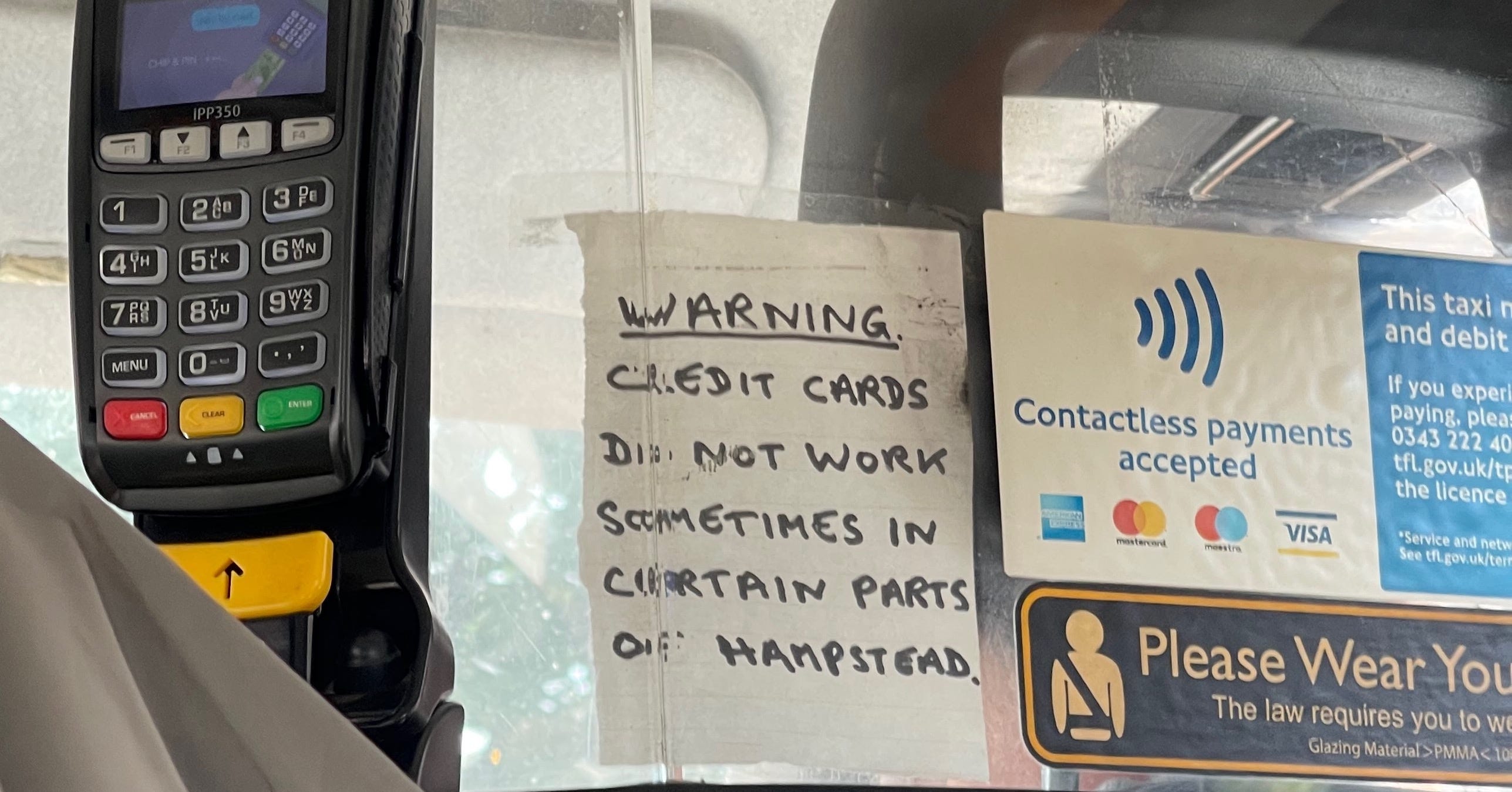
I ordered a taxi. I knew I shouldn’t. I knew it was a waste of money. But as soon as I climbed inside, the taxi driver announced: I’ve put the aircon on. Implied in the driver’s tone was that he’d put the aircon on for me. He thought I might be wearing a jacket, he said, since it was evening and I was heading into town. And in fact I was wearing a jacket.
I thought you might be going to an event, the driver said. I told him I was going for drinks at the London Library, before dinner with a friend.
The driver’s name was Sam. Because I was going to an event at a library, Sam volunteered the information that he had trained as a neurologist. When Sam was a teenager, he had a girlfriend who suffered from bad thought syndrome. That was what Sam called it. Bad thought syndrome. I wanted to correct him, since I had friends who suffered from intrusive thoughts. But Sam was the neurologist, not me.
Before Sam’s girlfriend died (the implication was that the girlfriend died by suicide), she saw a psychologist, and sometimes Sam and his girlfriend visited the psychologist together. This psychologist told Sam about another patient, who suffered from a repeating earworm. The patient heard the same old song in her head. Every day for ten years, the song entered the patient’s head. Nothing else was wrong. It was just the earworm.
One day, Sam’s girlfriend’s psychologist followed the patient. The patient often woke up without the earworm, but the song was always in her head by the time the patient arrived at work. So the psychologist followed the patient to work. The psychologist told the patient: stop walking and raise your hand when you hear the earworm. Sure enough, the patient heard the song and stopped walking. Look behind you, the psychologist said. The patient was standing outside a bakery. Twenty years before, the psychologist explained to Sam, the patient worked one summer as a baker, making bread with the radio on, during the period when the earworm was in the charts. It was the smell of bread, Sam explained to me. People don’t realise how smell can trigger memory.
The Proust effect, I said.
No, Sam said. This is real.
After his girlfriend died, Sam studied medicine, with a focus on neuroscience. You’re probably wondering how I ended up driving a cab, Sam said. In fact, I was wondering exactly that. Sam had a motorcycle accident when he was in his twenties. A car smashed him into the other lane, where another car pulverised his legs.
Amazing you want to drive a taxi after that, I said. But Sam didn’t hear me.
In the hospital after the crash, there was a nurse who’d spent time in the military. The nurse happened to be passing Sam’s bed, and noticed his foot. Can you feel this, the nurse asked, squeezing Sam’s big toe. But Sam couldn’t feel a thing.
That’s when I became an emergency, Sam said. They rushed him to surgery and removed his legs.
Sam lost everything in that crash. He dropped out of neurology, his new girlfriend left him, and he had to move in with his mum. He didn’t leave the house for three years. He had to learn to walk, to shower, to dress. From scratch.
When the accident happened, Sam had a medical journal in his rucksack. Before she broke up with him, his new girlfriend brought the bag to the hospital, and Sam read the journal in his hospital bed. One of the studies was about London taxi drivers. How London taxi drivers have hippocampuses, hippocampi, which are bigger than all the other hippocampi in the world. From bed, during that three-year recovery, Sam studied London road maps. He had nothing better to do, so he learned The Knowledge.
After three years, Sam recovered enough to go to a bar with his friends. It was his first time out of the house, and a woman approached him. She asked about Sam’s prosthetic legs, how he’d come by them. Sam told the woman his story: the one car smashing into him, the other car pulverising his legs, the nurse who spotted that he was an emergency. He’d died twice on the operating table, Sam told her. His heart stopped for thirty-three seconds. Then it stopped for forty-four seconds. He was showing off.
The reason I asked, the woman said, is because I was in a car crash. Everybody in the car survived, but the woman also died during surgery.
I died four times, the woman said.
The woman became Sam’s wife. He lived with her for three years, and they were happy years, but his possessions kept going missing. His phone, his keys. Sometimes his wife would move his keys, and Sam wouldn’t be able to find them to go to work. Sam’s wife never admitted that she’d moved the keys, and they used to have arguments.
Then I realised, Sam said. She’s got no short-term memory. The crash must have taken it away. After he decided this, Sam stopped arguing about the missing items. Eventually it stopped bothering him. They’ve been together twenty years.
It must be my bad memory, Sam says, when his keys disappear.
This is you, Sam said. The taxi was parked outside the library. What am I supposed to do now, I wondered.
I went into the library. All the desks had been taken out of the reading room, and people were standing around in clusters of three or four, pressed together near a drinks table. I glided between the groups for a little while, but didn’t recognise anybody. Pouring myself a glass of water, I offered the jug to a man who was waiting beside me. The man had electric hair and a gentle face. He took his water to the back of the room and stood by himself. I circled once more, and then went and introduced myself to the man.
The man’s name was Quentin. Quentin retired three years ago, he told me. Where did the time go, he wondered.
Maybe you’ve been busy, I said. Or maybe the opposite, I said.
You’re going to be embarrassed, Quentin said, but don’t be. My wife died.
I’m sorry, I said. I didn’t feel embarrassed, but I appreciated Quentin’s thoughtfulness. I thought Quentin must have learned over time to put people – strangers, friends he hadn’t seen in a while – at ease like this. I felt I’d made a good choice speaking to Quentin.
Before she died, Quentin told me, his wife made him move from London to Wales. Their plan was to see out their retirement together, he said. They moved into a house that was too big for two people, and a year later his wife died. Now the house was too big for one person, but Quentin still lived there.
You’re going to regret talking to me, Quentin said.
In fact, I didn’t regret it. I had more questions I wanted to ask. They can’t have been questions Quentin hadn’t heard before, but he didn’t mind answering them. When Quentin’s wife was alive, he told me, they’d spent their days working in different parts of the house. Nothing much changed after she died, and it was easy to forget, most of the time, that there was nobody else at home. Only when evening set in, especially in winter when it got dark so early, and his thoughts turned to cooking dinner, did Quentin remember all over again that he was alone, that his wife was dead.
That’s when things get a little weird, Quentin said.
What does weird mean, I asked.
Are you sure you want to know? Quentin said. His expression was anxious, but then a noise interrupted us. A man was standing on a platform above the reading room, beginning a speech. I read my watch and saw that I was about to be late for dinner. I felt bad that I would have to cut short my conversation with Quentin, and took out my phone to text Francis about my lateness. My phone was vibrating. I thought Lena was calling, that there was a crisis with the baby. But it was only my cousin.
It came back to me that I had arranged to phone my cousin while I walked to the tube, because my cousin’s husband had died suddenly, from an undiagnosed heart condition. My cousin and her husband had been going through divorce, but after his heart attack, my cousin remembered how much she loved her husband. She was devastated, and it was my turn to check on her. But I had taken Sam’s taxi instead, and forgotten to call.
The speech lasted a long time. Finally, it finished, and then there was a reading. Behind the reader was another reader, holding printed pages, waiting to read. I was becoming later and later, and for two different events, the dinner and the call. Plus Quentin. I texted my cousin, keeping my eyes on the reader on the platform, not wanting to appear rude. I sent the message, then glanced at it. The message was a jumble of incoherent symbols and letters.
The readings finished. You wanted to know what weird meant, Quentin said, continuing our conversation. I apologised several times, while Quentin smiled. I did want to know, I told him. But I had to leave. Quentin seemed relieved not to have to talk to me any more.
I dashed outside, but it was too late to walk to the restaurant, as I’d originally planned. Francis had texted to say he’d arrived and was waiting for me, and so when another taxi passed, I threw out my arm.
I hoped this new driver wouldn’t be as chatty, but when I climbed on board he asked how my evening was going. Strangely, I told the driver. Every conversation I have is about death.
About death? he repeated.
I’m sorry, I told the driver, but I have to make a phone call.
I called my cousin. She answered in a whisper, her voice furious. My cousin was in synagogue, in the period of thirty days’ mourning. The service had already begun, and my cousin couldn’t speak, because she was praying for her husband. She was so angry, I almost laughed. I could imagine myself laughing, the way I sometimes laughed during arguments with Lena. I could imagine my cousin saying, Do you think this is funny? I imagined her voice as Lena’s voice, exactly the way Lena would say it.
I really am sorry, I said, controlling my voice. I let my cousin hang up.
So I suppose you don’t want to hear my story, my new taxi driver said.
Yours?
About death. I don’t suppose you want another one.
If you like, I said. I didn’t want to hear this driver’s story, or any stories. I only wanted to sit in silence, to calm down, to find a way of arriving at dinner that would allow me to tell Francis, calmly, amusingly, about the weirdness of my evening.
No, the new taxi driver said. Better not.
If you don’t want to, that’s fine, I said.
Well, the new driver said.
The story involved Elton John. The taxi driver’s brother died on the drive home from a Watford game, in the days when Elton John owned Watford Football Club. Elton John sent a Watford rosette to the taxi driver’s brother’s funeral. Elton John believed the brother was a Watford fan, because all the other people who died in the crash were Watford fans. But in fact the brother supported West Ham. At the funeral, all the colours were claret and blue, West Ham’s colours. Except for this one orange Watford rosette.
The death destroyed my family, the new taxi driver said. His parents died very quickly, one after the other, still in grief, leaving the taxi driver alone.
I was no longer in control of my face. I imagined the man, all by himself, without any of the family he’d known as a child. I could have wept for him. Instead, I was trying to stop laughing. Do you think this is funny, I said to myself. I set my face, but it broke into laughter. What could I do? I set my face again.
The taxi was passing through Trafalgar Square. Out one side, people were sitting in the evening sun, eating from foil wraps. Pigeons walked at their feet, pecking at crumbs. There were laughing faces, smiling faces. On the steps, families leant back, warming their closed eyes in the setting sun, babies asleep on their mothers’ chests. Through the other window, my taxi was passing a shopfront. The dark reflection shimmered in the glass, carrying me away.
Thanks for reading One More Draft! Pocket Lint is a nutritious serial, fortified with trivia and nonsense. If you didn’t enjoy this post, be sure to miss the complete Pocket Lint Archive. Feel free to provide feedback through my Complaints Form, and do comment and share to help others avoid my work.
Until next time, with warmth and gratitude,
LW
Riveting! Reminds me of Unconsoled by Kazuo Ishiguro - but also feels singular in style
This is a wonderful, captivating piece - so dark and moving. x